How to Automate Candidate Follow-Ups and Keep Hiring Moving Efficiently
AI & TechnologyHiring is one of those things that looks simple from the outside but feels like a full-time job once you are in the middle of it. You have job postings live, resumes coming in, interviews being scheduled, and somewhere in all of that, you are supposed to be following up with every single candidate at every stage. For most HR teams, that last part is where things fall apart.
Not because they do not care. But because following up manually with 40, 80, or 200 candidates across multiple open roles is genuinely hard to keep on top of. Messages get delayed. Candidates stop hearing back. Good people accept other offers. And before long, the hiring process that was supposed to move fast starts moving very slowly. This is exactly the problem that recruitment automation is built to solve.
Why Candidate Follow-Ups Matter More Than You Think
Let us be honest about something. Most candidates are not just applying to your company. They are applying to five, ten, sometimes twenty companies at the same time. If your process goes quiet for a week, they assume you are not interested and move on.
A timely follow-up does more than just keep candidates informed. It tells them that your company is organised, responsive, and values their time. That impression matters, especially when you are competing for skilled candidates who have options.
On the recruiter side, consistent follow-ups also mean fewer no-shows for interviews, better candidate preparation, and smoother communication throughout the process. When candidates know what is happening and what comes next, they stay engaged. The problem is not that recruiters do not know this. The problem is finding the time to actually do it.
The Real Cost of Manual Follow-Ups
Picture a recruiter managing three open roles with 60 active candidates across different stages. Every morning, they need to figure out who needs a status update, who has an interview coming up, who needs to be moved forward, and who needs a polite rejection.
That alone can take an hour or two just to sort through. And that is before writing any actual emails. Here are some of the most common problems HR teams run into when doing this manually:
Candidates fall through the cracks - When you are juggling multiple roles and a full inbox, some follow-ups simply do not happen. A candidate who applied two weeks ago has heard nothing. They have already moved on.
Scheduling becomes a back-and-forth nightmare - Coordinating interview times through email is slow. Does Tuesday work? Actually, can we do Wednesday? Sorry, that slot is now taken. Each exchange adds a day or more to the timeline.
There is no consistent candidate experience - One recruiter might follow up quickly. Another might take five days. Candidates from the same job posting have completely different experiences, which hurts your employer brand.
Recruiters spend time on admin instead of hiring - The whole point of having a recruiter is to find and evaluate good people. When half their day goes into sending status update emails and rescheduling interviews, that is not a great use of their skills.
How Automation Changes the Equation
Recruitment automation does not replace the human side of hiring. Interviews still need human judgment. Hiring decisions still need people. But all the repetitive coordination work that happens in between? That is where automation genuinely helps. Here is what that looks like in practice.
Automated Follow-Up Emails
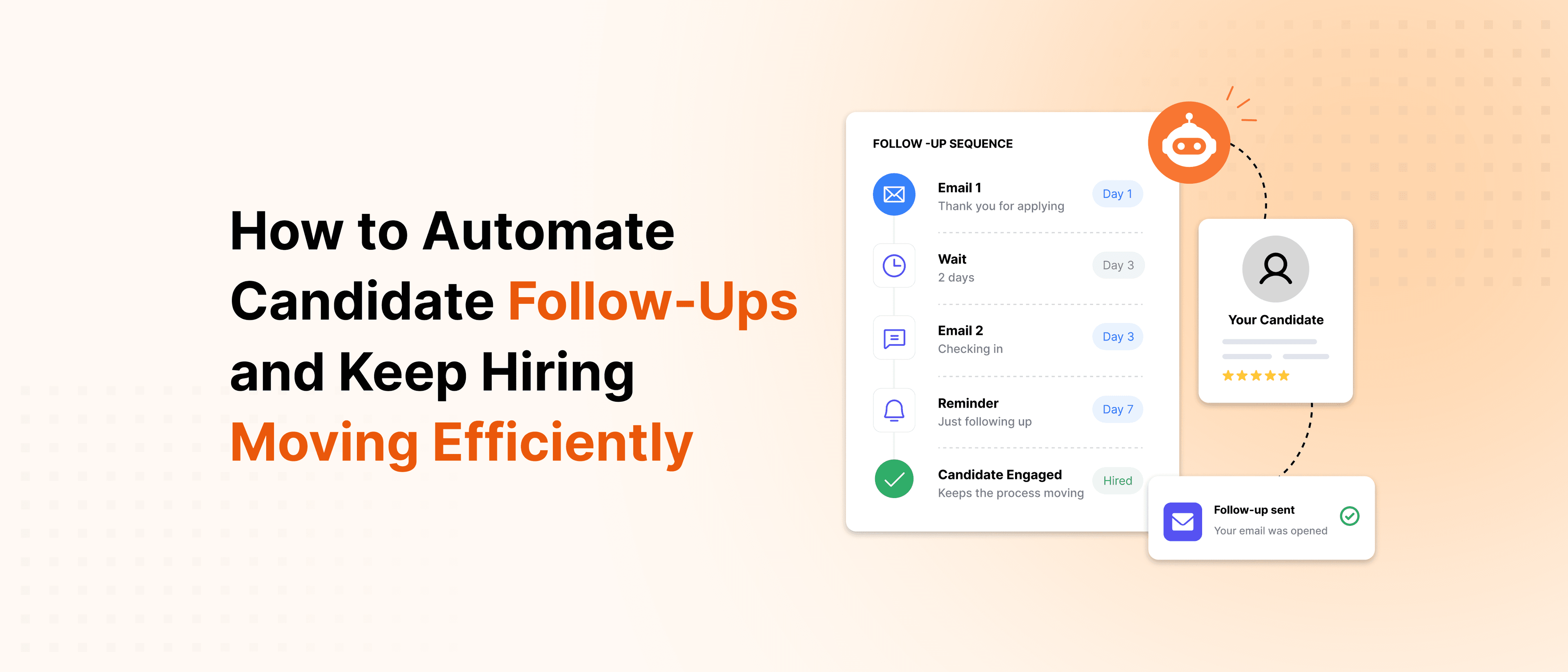
Instead of manually sending a "we received your application" email to every candidate, that message goes out automatically the moment someone applies. Same with status updates. When a candidate moves from one stage to another in your pipeline, they get notified without anyone having to remember to do it.
This keeps candidates informed without adding work to your plate.
Interview Scheduling Without the Back-and-Forth
One of the biggest time-wasters in recruitment is coordinating interview times. Automated scheduling tools let candidates pick a time from a list of available slots based on the interviewer's actual calendar. No email chains. No delays. The interview gets booked in minutes.
For example, a start-up hiring for a developer role could send an automated scheduling link right after a candidate passes the screening stage. The candidate books their slot that evening. The recruiter walks in the next morning to find three interviews already on the calendar, all confirmed.
Automated Reminders
People forget things. Sending a reminder to both the candidate and the interviewer 24 hours before the interview reduces no-shows significantly. These reminders can include the meeting link, the time, what to prepare, and any other details that would normally need to be sent manually.
Candidate Tracking in One Place
When candidate information is spread across spreadsheets, email threads, and sticky notes, things get missed. A good candidate management system keeps every application, note, and communication in one place. Anyone on the hiring team can see exactly where each candidate stands without having to ask.
What a Smoother Hiring Workflow Actually Looks Like
When follow-ups and scheduling are automated, the hiring workflow changes noticeably. Here is a simple comparison:
Without automation, a recruiter might spend the first hour of every day just figuring out what needs to be done. They send emails one by one, chase down interview confirmations, and update a spreadsheet at the end of the day. If they are out sick, everything stalls.
With automation, the system handles routine communication in the background. The recruiter starts the day by reviewing responses, moving candidates forward, and focusing on the actual evaluation work. The pipeline keeps moving even when someone is out.
The difference is not just about speed. It is about consistency. Every candidate gets the same quality of communication regardless of how busy the team is.
Where Platforms Like HireTechies Come In
Platforms designed around modern recruitment workflows, like HireTechies, bring all of these pieces together in one place. Instead of patching together separate tools for email, scheduling, and tracking, everything lives in a single system.
Recruiters can set up automated emails for each stage of the pipeline, integrate calendar scheduling so candidates can book their own interview slots, and track every applicant's status without digging through inbox threads. The hiring team stays on the same page, and candidates stay informed throughout.
For smaller teams and start-ups, especially, this kind of setup makes a real difference. You do not need a large HR department to run a professional, organised hiring process. You just need the right workflow in place.
Practical Tips for Getting Started With Recruitment Automation
If you are thinking about introducing more automation into your hiring process, you do not need to overhaul everything at once. Start with a few small changes and build from there.
Map your current process first - Write down every step from application to offer. Identify which steps are repetitive and which ones require actual human judgment. The repetitive ones are your automation candidates.
Start with the application acknowledgement - If you are not already sending an automatic confirmation when someone applies, start there. It is a small thing that makes a big impression.
Set up stage-based notifications - When a candidate moves to a new stage in your pipeline, they should know about it. Automate this so it happens without anyone having to remember.
Use scheduling links for interviews - Stop coordinating times over email. Send a link and let the candidate pick a slot. You will reclaim hours every week.
Review your setup regularly - Automation is not a set-it-and-forget-it thing. As your process evolves, your automated messages and workflows should evolve too. Make sure the tone still sounds like your company and the information is still accurate.
Keeping the Human Touch
One concern some recruiters have about automation is that it will make the process feel impersonal. And that is a fair thing to think about.
The key is using automation for the logistical parts and keeping humans involved for the meaningful ones. An automated scheduling link is not cold. It is convenient. But a phone call to walk someone through an offer? That should still be a person. Good automation handles the coordination, so your team has more time for the conversations that actually matter.
Conclusion
Candidate follow-ups are not just a nice-to-have. They directly affect how quickly your roles get filled, how candidates experience your company, and how much time your recruiters spend on work that actually moves things forward.
Manual follow-ups work when you are hiring once in a while. They start breaking down when you are managing multiple roles with dozens or hundreds of candidates at different stages. That is when automation stops being a luxury and starts being a necessity.
The good news is that setting this up is much more accessible than it used to be. The right tools make it possible for even small teams to run a recruitment process that is fast, consistent, and professional without burning out your HR team in the process.
If your hiring workflow feels heavier than it should, the problem might not be the number of candidates. It might be the amount of manual coordination holding everything together.